
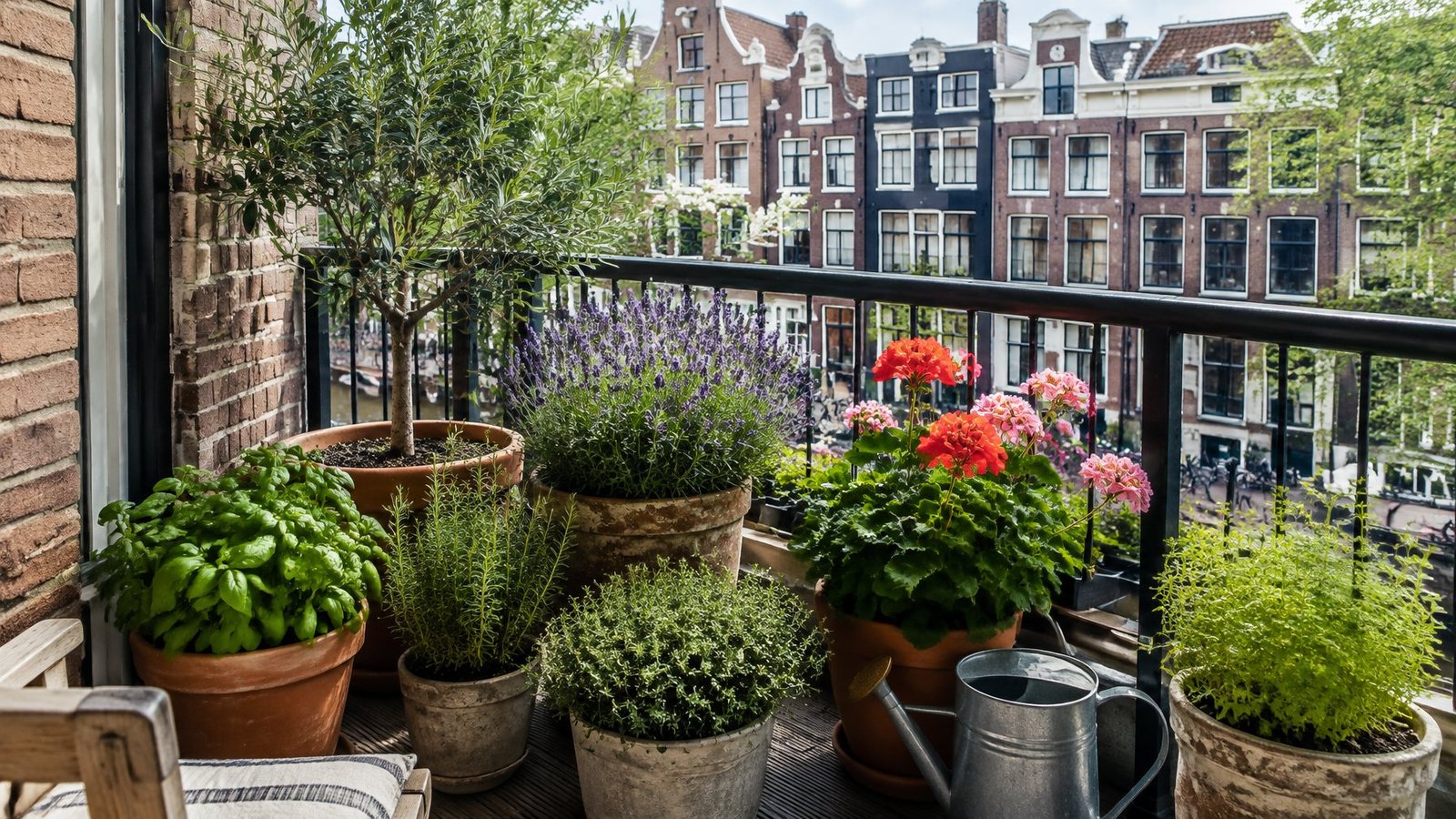
Outdoor space in Amsterdam is precious.
For many residents, it is a narrow balcony, a small roof terrace, a shared courtyard or a strip of pavement outside the front door.
Yet these tiny spaces can be surprisingly productive and beautiful, with the right plants and a little planning.
Amsterdam’s climate brings its own challenges.
Wind sweeps along the canals and across open water, summers can be warm but changeable, and winters are mild but damp.
This guide explains how to choose plants that cope, and how to look after the practical side of a small city garden.
Key Takeaways
- Wind is the biggest challenge on Amsterdam balconies, so choose sturdy plants and heavy pots
- Match plants to your light: sunny, part-shade or shade
- Check weight limits and building rules before adding large planters
- Good drainage protects both your plants and your building
- Herbs on a balcony or a kitchen windowsill are an easy, rewarding start
Know Your Conditions
Before buying a single plant, spend a few days watching your space.
- Sun. How many hours of direct sun does it get, and at what time of day? A south-facing balcony can be hot in summer, while a north-facing one may see little direct light.
- Wind. Higher floors and balconies facing open water catch more wind.
Notice which corners stay calmer.
- Rain. Overhangs can leave plants dry even after a downpour.
Plants That Cope With Wind
Wind dries out leaves and soil and can snap tall stems.
Good choices include:
- Ornamental grasses, which bend rather than break
- Lavender and rosemary, which handle sun and wind well
- Low-growing sedums and other succulents
- Compact shrubs such as dwarf pines and small hebes
- Heathers for colour in autumn and winter
Use heavy pots, group containers together for shelter, and avoid tall, top-heavy plants on exposed balconies.
Plants for Sun and Shade
Sunny Balconies
Mediterranean herbs, geraniums, lavender, salvias and small olive trees enjoy full sun.
Tomatoes and strawberries also do well in sunny, sheltered spots.
Part Shade
Hydrangeas, fuchsias, heucheras and many herbs such as parsley and mint thrive with a few hours of sun.
Shade
Ferns, hostas, ivy and begonias brighten darker balconies and courtyards.
Weight, Safety and Building Rules
Large planters filled with wet soil are heavy.
Before adding big containers, check whether your building or homeowners’ association has rules on balcony loads and fixtures.
Place heavy pots close to the wall rather than on the outer edge, and secure anything that could blow off.
Hanging planters on the outside of railings can be a hazard in strong wind.
Drainage: The Overlooked Essential
Every pot needs drainage holes, and a layer of coarse material at the bottom helps excess water escape.
Saucers stop water running over neighbours’ balconies below, but empty them after heavy rain so roots do not sit in water.
Soil, leaves and debris washed from planters can also clog balcony and roof terrace drains, especially in autumn.
Clear drain covers regularly.
If water starts backing up, a blocked drain is a job for professionals: in Amsterdam, ORS-RIOOLSERVICE offers plumbing and sewage services with 24/7 availability, which is reassuring when a downpour arrives at the worst possible moment.
Bring the Garden Into the Kitchen
Herbs are the easiest edible plants for small spaces.
Basil, chives, parsley, thyme and mint all grow well in pots, and picking them fresh changes the way you cook.
Keep mint in its own container, as it spreads quickly.
If you have no balcony at all, a bright kitchen windowsill works well for many herbs.
If you are planning a new kitchen, it is worth thinking about light and windowsill space from the start.
In Amsterdam-Noord, Keuken Montage – Flexibel Montage handles kitchen design, full renovations and installation with a single team, from measuring to a ready-to-use kitchen, so you can discuss the layout before anything is fitted.
Flowers and Seasonal Colour
A few seasonal flowers make a small space feel special.
Spring bulbs such as tulips, daffodils and crocuses are a classic Dutch choice, planted in autumn for colour the following spring.
Summer brings geraniums, petunias and trailing plants, while autumn and winter suit heathers, cyclamen and small evergreens.
For cut flowers and bouquets to complement your plants, or for special occasions, Essentially Amsterdam’s guide to Amsterdam luxury florists covers options and delivery across the city.
Caring for Container Plants
- Water consistently. Pots dry out faster than garden beds, especially in wind.
- Feed regularly. Container plants use up nutrients quickly in the growing season.
- Refresh the soil. Replace the top layer each spring.
- Protect in winter. Move tender plants to sheltered spots and wrap pots in very cold spells.
- Check for pests. Aphids and snails are common; act early.
Frequently Asked Questions
What are the easiest balcony plants for beginners in Amsterdam?
Herbs, lavender, geraniums and sedums are forgiving and cope well with typical city conditions.
How do I protect plants from wind on a high balcony?
Use heavy pots, group plants together, choose low and flexible plants, and consider a windbreak screen.
Do I need permission for large planters?
Check your building’s rules or homeowners’ association, especially for heavy containers and anything fixed to walls or railings.
A small balcony can become your favourite room.
Start with a few tough plants, learn what your space likes, and grow from there.